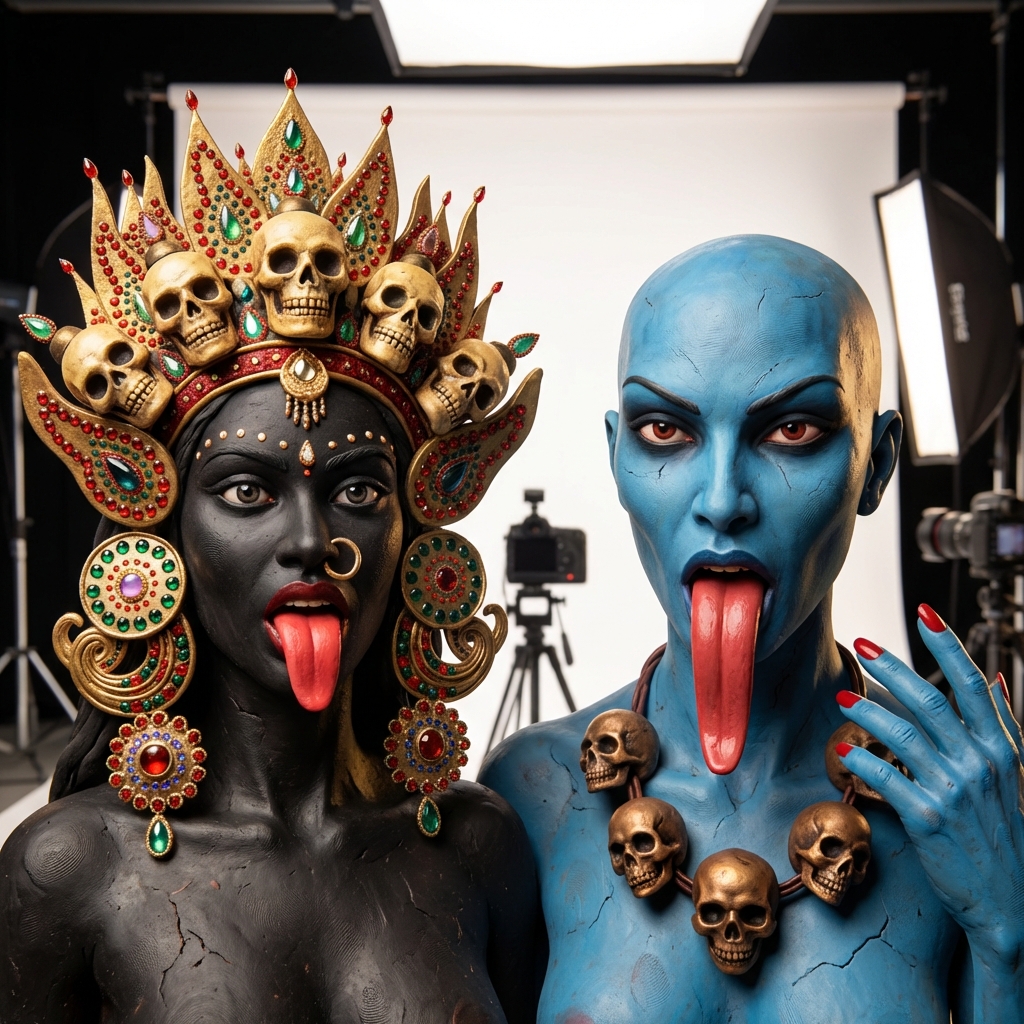
If you type “What is Tantra?” into a search engine, you will drown in a sea of contradiction. One website tells you it has nothing to do with sex. The next one sells you a weekend workshop where strangers breathe on each other’s necks in a hotel conference room. A third offers you a scholarly essay dense enough to sedate a doctoral committee. None of them are entirely wrong. None of them are entirely right. And that, in itself, tells you something essential about the subject.
Tantra resists summary. Not because it is vague, but because it is too vast. Imagine someone asking you, “What is science?” You could answer with physics, or biology, or chemistry, or medicine, or psychology, or astronomy. You could speak about the method or the findings. You could talk about Newton or about quantum mechanics. You would be correct in all cases, and incomplete in every single one. Tantra is like that, except the subject has been developing on the Indian subcontinent for thousands of years, across dozens of sects, in hundreds of languages, and much of it was deliberately hidden from public view.
This article does not pretend to be the final word. There is no final word on Tantra. What it offers instead is a serious, grounded, and honest orientation. We will cover the etymology, the history, the philosophy, the practices, the different schools, the controversies, the dangers, and the extraordinary depth of a tradition that gave birth to yoga, influenced Buddhism, shaped Hinduism, and quietly runs through the bloodstream of every spiritual practice that has ever come out of India.
Let us begin where all honest inquiry begins: with a word.
The Sanskrit Roots: What the Word “Tantra” Actually Means
The word Tantra (तन्त्र) is Sanskrit. Its verbal root is √tan, which means “to extend,” “to spread,” “to spin out,” or “to weave.” The suffix ‑tra is typically instrumental, indicating a tool or a means by which something is done. So at its most literal, tantra means “a means of extending” or “an instrument of expansion.”
But Sanskrit is a language of remarkable density, and a single word can carry an entire philosophy depending on the tradition interpreting it.
The earliest known use of the word appears in the Rig Veda, in hymn 10.71, where tantra refers to the warp of a loom, the set of threads stretched lengthwise on a weaving frame across which the weft is interlaced. This is not yet a spiritual usage. It is a weaving term. But the metaphor is potent: the warp is the hidden structure, the invisible skeleton of the cloth. Without it, nothing can be woven. The weft, the part you see and touch, depends entirely on this underlying framework.
The 5th‑century BCE grammarian Pāṇini, in his Sūtra 1.4.54–55, explains tantra through the compound “svatantra,” which he translates as “independent” or “one who is his own warp, his own cloth, his own weaver.” Patañjali, in his Mahābhāṣya, expands on this, affirming that tantra’s metaphorical meaning of “extended cloth, framework” applies to many contexts, and that tantra fundamentally means “principal” or “main.”
Then there is the interpretive etymology, what Sanskrit scholars call nirukta. The Kāmikā Tantra provides the classical nirukta: “A tantra is so called because it expands (√tan) on the topics of mantra and the principles of reality (tattvas), and because it saves (√tra) us from the cycle of suffering.” Here, the suffix ‑tra is re‑derived from the root √tra, “to save” or “to protect.” In this reading, Tantra becomes: the expansion of knowledge that liberates.
Sadhguru Jaggi Vasudev translates Tantra simply as “technology.” This is not wrong. If you strip the word to its structural function, tantra is indeed a technology. It is a set of tools, methods, and frameworks for producing a specific result. But calling it merely “technology” can also be misleading, because it implies Tantra is neutral, functional, value‑free. It is not. Tantra is a technology with a specific aim: the direct experience of ultimate reality through the full spectrum of human experience, including the parts most spiritual systems reject.
A more complete definition would be this: Tantra is a systematic technology for harnessing the powers of nature—including sexual energy, breath, sound, vision, emotion, and consciousness itself—into a pipeline of transformation, where the raw material of ordinary human experience is refined into direct knowledge of who and what you actually are.
So when someone asks, “What does Tantra mean?” the honest answer is: it depends who is asking, what century they are in, and what tradition they belong to. But if you had to distill it to one sentence, you could say: Tantra is the hidden structure that holds everything together, and the practice of learning to see it, to work with it, and ultimately to become it.
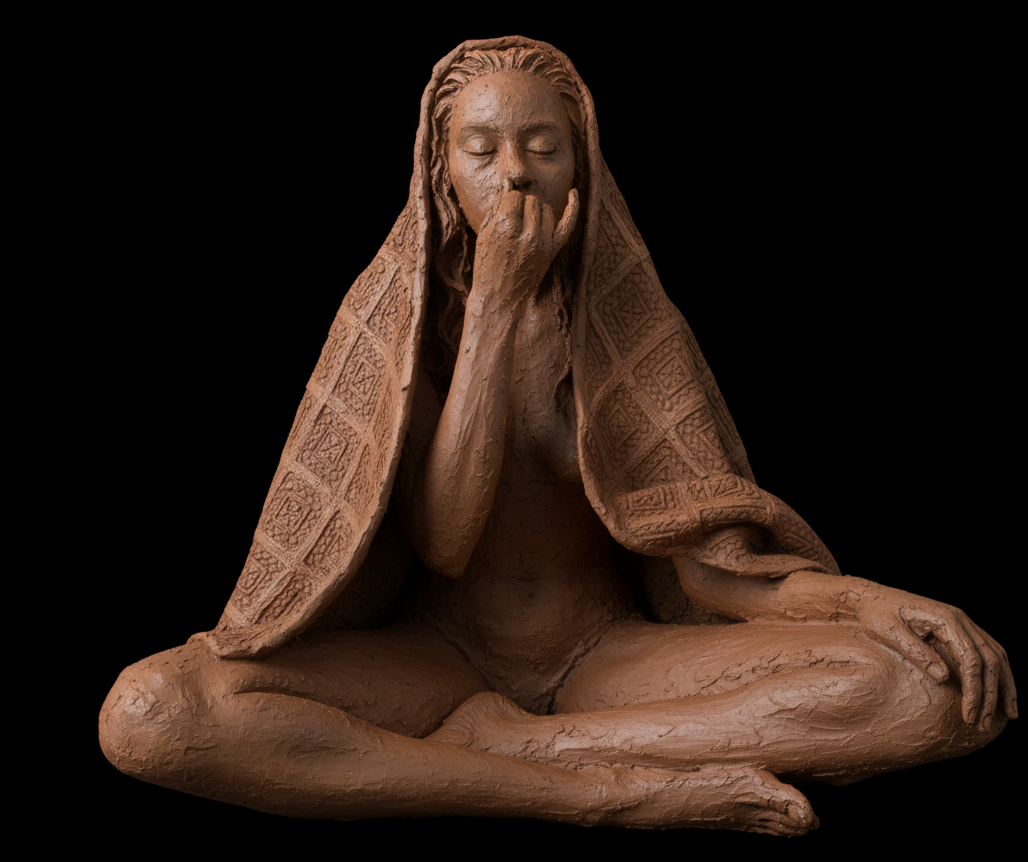
Pranayama and Meditation
Origins: Where Did Tantra Come From?
Nobody knows when Tantra began. This is not evasion. It is a fact that scholars, archaeologists, and practitioners have debated for over a century without consensus.
The word tantra first appears in a spiritual context in texts dating to roughly 500 CE, with the earliest surviving physical document being a stone inscription from 423 CE found near the town of Gangdhar in Rajasthan. That inscription describes an “awesome abode of the divine Mothers” filled with dākinīs. The earliest surviving tantric scripture, the Niśvāsa‑tattva‑saṃhitā, was composed over several generations between approximately 500 and 625 CE, later copied onto a 9th‑century palm leaf found in Nepal. These are the oldest written tantric teachings we can hold in our hands.
But the practices themselves are almost certainly far older than the texts. Tantra, by its own self‑understanding, is primarily an oral tradition. The written scriptures record what had already been transmitted mouth to ear, guru to disciple, for generations or centuries before anyone committed it to a palm leaf. This is important. The absence of early written evidence does not mean the absence of early practice.
The deeper question is whether Tantra predates the Vedic civilisation altogether.
The Indus Valley Civilisation, which flourished from approximately 3300 to 1300 BCE across what is now Pakistan and northwestern India, produced artifacts that hint at proto‑tantric elements. Excavations at Mohenjo‑daro and Harappa have uncovered seals depicting figures seated in meditative postures, images that some scholars interpret as early forms of Shiva or proto‑Shiva. There are female figurines, possibly representations of a goddess or mother principle. There are images of animals, trees, and ritual scenes that suggest a worldview rooted in nature worship and sacred feminine power.
The tension and eventual merger between these two streams—the Vedic and the Tantric, the patriarchal fire‑ritual tradition and the goddess‑worshiping earth tradition—is one of the great engines of Indian civilisational development. Over millennia, these currents intertwined so completely that it became impossible to separate them. Today, virtually everything we think of as “Hindu” has tantric threads woven through it: the temple rituals, the deity worship, the mantras, the yantras, the concept of shakti, the chakra system, the practice of yoga itself.
This is why the question “What is Tantra?” is so impossibly large. Tantra is not one thing that appeared at one time. It is a vast underground river system that has been feeding Indian spirituality, philosophy, medicine, art, architecture, and ritual for as long as anyone can trace, possibly longer.
The Problem of Scope: Tantra is Almost Everything in India
One of the reasons Tantra is so difficult to define is that it is not a single practice, not a single school, not a single philosophy. It is the underlying operating system of Indian spiritual culture. Almost everything you find in India, if you trace it back far enough, sits on tantric foundations.
The temple you visit in Varanasi? Its rituals of worship, the way the deity is bathed, dressed, fed, and put to sleep, the mantras chanted during puja: these are tantric procedures, codified in tantric texts called Āgamas and Tantras. The yoga class you attend in Brooklyn? The asanas, the pranayama, the bandhas, the mudras: all of these are tantric technologies, originally embedded within a much larger system of practice that included deity worship, mantra recitation, and subtle body visualization. The Ayurvedic doctor who reads your pulse? The five‑element theory (pañca bhūta), the concept of subtle energies (tanmātrās), the understanding of prāṇa: these are tantric categories.
This is the paradox. Tantra is simultaneously everywhere and invisible. It is so deeply embedded in the fabric of Indian spiritual life that most people practicing it do not know they are practicing it. When a Brahmin priest performs a puja according to Āgamic prescriptions, he is performing tantra. When a South Indian grandmother draws a kolam pattern on her threshold at dawn, she is engaging with tantric geometry. When a devotee of Krishna chants the Hare Krishna mantra, the mantra itself—its sound structure, its prescribed repetition, its assumed effect on consciousness—is a tantric technology.
This is why many Indian scholars and practitioners bristle when Westerners reduce Tantra to sex. It is like reducing science to chemistry, or worse, reducing chemistry to one particular chemical reaction. The sexual practices of Tantra are real and important, and we will discuss them honestly in this article. But they constitute a small fraction of an enormous tradition that encompasses cosmology, metaphysics, psychology, medicine, ritual, architecture, astrology, art, music, grammar, and governance. For an exploration of the Mahavidya goddesses and how they relate to the Nitya deities, see our article on Indian Tantra: Mahavidyas versus Nityas.

Baglamukhi and Dhumavati Goddess
Tantra and Sex: The Question Everyone Asks
Let us address this directly, without embarrassment and without apology.
In the Western world, the word Tantra is almost synonymous with sex. This association is not entirely invented, but it is enormously distorted. The distortion runs in two directions. First, there are those who use the word Tantra as a marketing term for sexual workshops that have little or no connection to any actual tantric lineage or practice. Second, there are those who, in reaction to this commercialization, insist that “real Tantra has nothing to do with sex.” Both positions are wrong.
The truth is more interesting and more dangerous than either.
In left‑handed Tantra, sexual energy is not merely one tool among many. It is considered the highest energy available to a human being, the most concentrated expression of Shakti, the creative force of the universe. The Vāmācāra practitioner does not use sex to “spice up” their spiritual practice. They understand that the sexual impulse, precisely because it is the most powerful force in human experience, is the most direct route to the dissolution of the ego and the revelation of non‑dual consciousness.
The Buddha himself, according to the Pali canon, said that if there were two energies as powerful as lust for sex, no one would ever get enlightened, including himself. He meant this as a warning. The Vāmācāra tantrikas took it as a map. If sexual energy is the most powerful force in human experience, then it must also be the most powerful fuel for transformation, provided you know how to use it without being consumed by it.
Consider the argument from the other direction. Is there anything actually more fundamental than sex? Not the act itself, but the force behind it: the drive toward union, toward creation, toward the dissolution of boundaries between self and other. Every human being alive exists because of this force. Every moment of genuine intimacy, every experience of boundary dissolution, every creative act, every birth: all of it traces back to this energy.
So when someone asks, “Is Tantra about sex?” the honest answer is: Tantra is about everything, and sex is part of everything. Some tantric paths work explicitly with sexual energy as their primary method. Many others do not. But no authentic tantric path pretends that sexual energy does not exist or that it is not important. For a deeper exploration of how sexual energy and desire operate within the tantric framework, read The Universe of Desire: Wire your Chakras Downwards and The Forbidden Path of Semen Retention in Tantra.
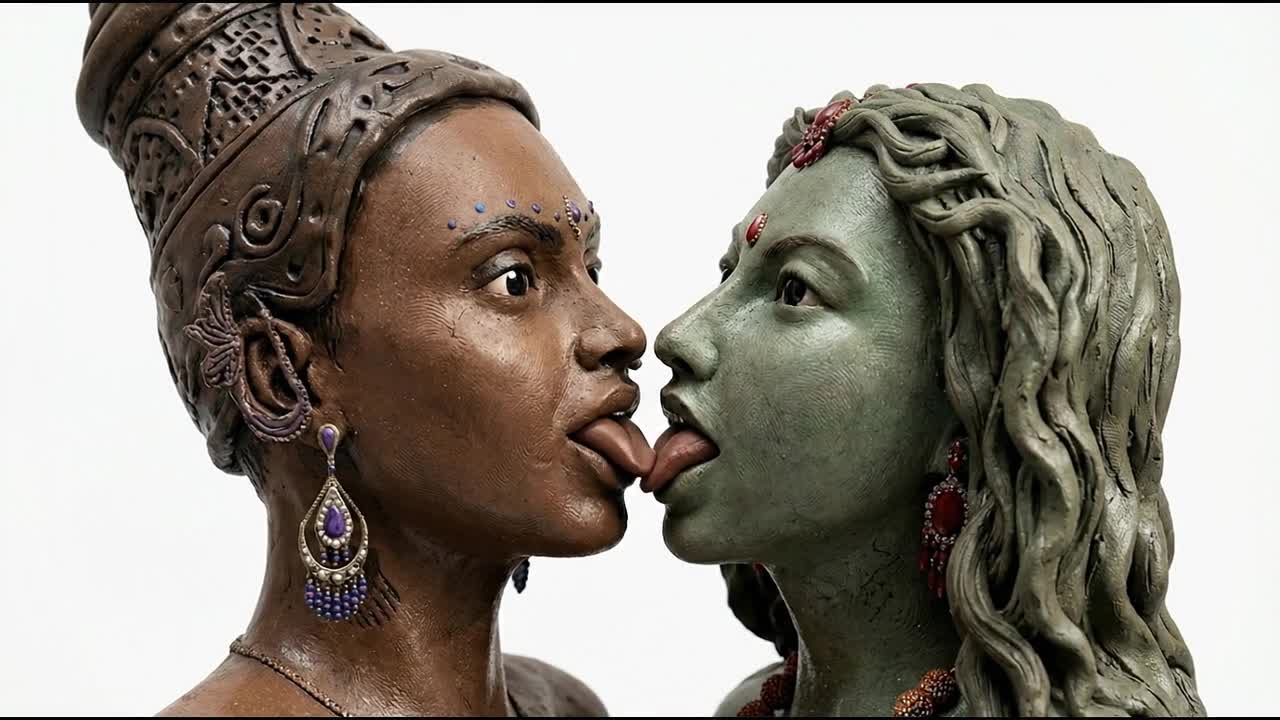
Kissing Goddesses
Kissing Humans
Why Are There So Many Gods? Polytheism, Monotheism, and the Tantric View
Visitors to India are often struck by the sheer number of deities. Estimates range from thirty‑three principal gods to three hundred and thirty million. Temple walls crawl with figures. Roadside shrines pop up at every turn. Ganesha with his elephant head, Kali with her necklace of skulls, Shiva with his trident and serpents, Lakshmi on her lotus, Hanuman leaping across the sky. To a Western eye trained on monotheism, this looks like polytheism: many gods, each competing for devotion.
It is not.
The tantric understanding of deity is radically different from the Abrahamic model. In the Abrahamic traditions, God is one, separate from creation, and usually male. You worship Him. You do not become Him. There is a permanent ontological gap between the creator and the created.
In Tantra, the divine is not separate from creation. It is creation. Every phenomenon, every object, every being, every force of nature is an expression of one underlying consciousness, one Shakti, one creative intelligence manifesting itself in infinite forms. The “gods” are not separate beings competing for your prayers. They are aspects of a single reality, like facets of one gem, each reflecting the same light from a different angle.
This brings us to one of the most beautiful concepts in the tantric world: Iṣṭa Devatā, your chosen deity. The idea is simple and radical. You do not have to worship all the gods. You find the one that resonates most deeply with your own nature, the one whose qualities mirror something essential in you, and you give yourself to that relationship completely.
This is not polytheism. It is not monotheism either. It is something that does not have a proper English name. You could call it cosmotheism, or radical pantheism, or what some scholars term “kathenotheism”: the worship of one god at a time, each treated as supreme in the moment of worship. The understanding is this: God is not far away. God is here, in everything, wearing everything, being everything, including you.
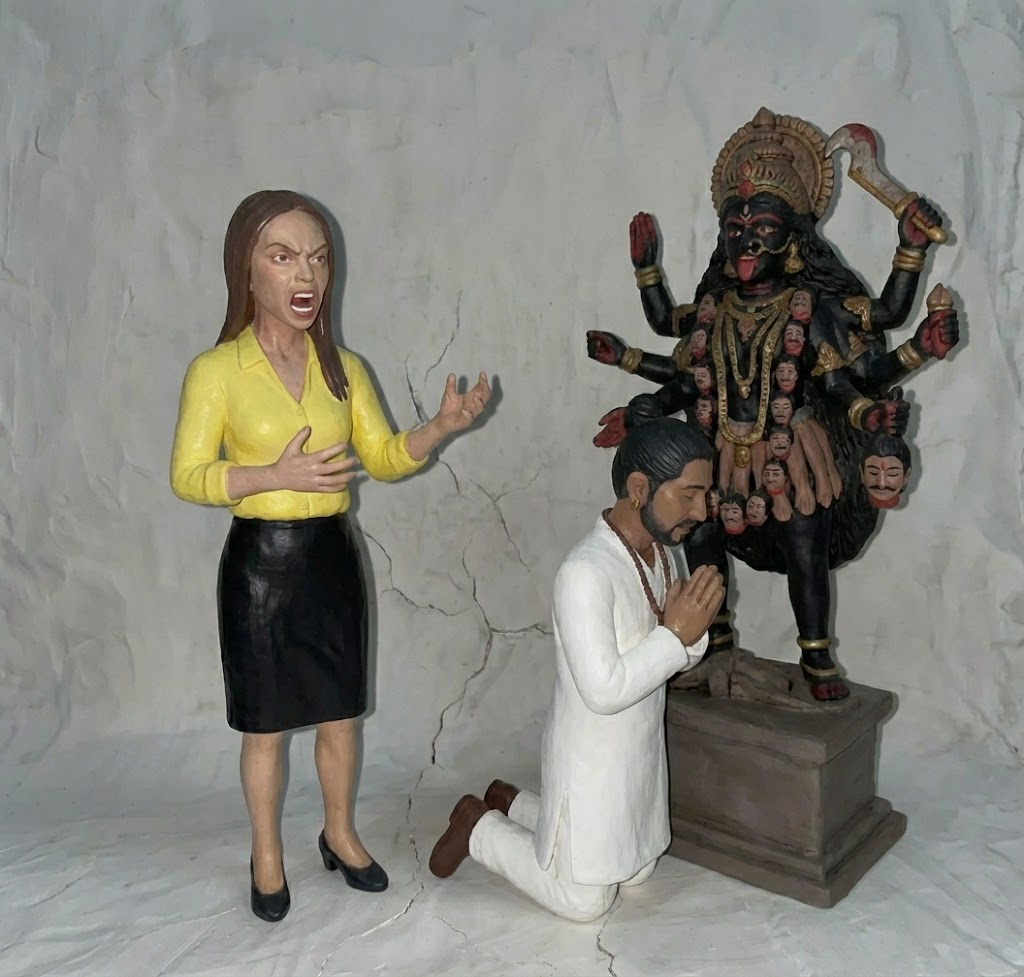
Is Kali your wife or a statue?
Vāmācāra and Dakṣiṇācāra: The Left and Right Hands of Tantra
Within the vast world of Tantra, there is a fundamental division between two approaches: Dakṣiṇācāra, the right‑handed path, and Vāmācāra, the left‑handed path. These are not competing religions. They are different strategies for reaching the same destination, adapted to different temperaments, different levels of readiness, and different understandings of risk.
Dakṣiṇācāra is the path of convention. It works within the framework of orthodox Hindu values: purity, vegetarianism, celibacy or marital fidelity, adherence to caste rules, and worship conducted through established rituals. Think of it as the highway with guardrails.
Vāmācāra is the path of transgression. It deliberately works with what orthodox society rejects: meat, alcohol, fish, parched grain, and sexual union—the famous pañca makāra, or “five Ms” (māṃsa, madya, matsya, mudrā, maithuna). The left‑handed practitioner does not break these taboos for pleasure or rebellion. They break them as a method of breaking the mind’s habitual categories of pure and impure, sacred and profane, acceptable and forbidden.
The logic is precise. The mind constructs reality through dualities: this is clean, that is dirty; this is spiritual, that is worldly; this is divine, that is demonic. These dualities are the bars of the cage. As long as you believe some experiences are sacred and others are not, you remain trapped in a fragmented reality. The Vāmācāra practitioner walks straight into what they fear and find disgusting, not to wallow in it, but to discover that the same consciousness runs through all of it.
This is extraordinarily dangerous work. Without proper initiation, without a qualified guru, without years of preparatory practice, working with the pañca makāra will not liberate you. It will destroy you. The entire tradition of the left hand depends on a container, a living lineage, a teacher who has already walked through the fire and can guide you through it. For more on the dangers and why honest teachers warn against casual approaches, see Run Away from Tantra.
The modern tendency to classify tantra by color—red tantra (sexual), white tantra (meditative), black tantra (magical)—is a Western invention with no basis in traditional Indian classification. You cannot judge Tantra by appearances. That is one of its most fundamental teachings.
Horny Goddesses
Horny Humans
The Path of Self‑Knowledge: What Tantra Really Does
If someone asks me personally, “What is Tantra?” I answer: it is the path of knowledge you walk to find out who you really are.
Not who you think you are. Not who your parents told you that you are. Not who your culture, your education, your job title, or your romantic partner tells you that you are. But what is actually there, underneath all of that.
Are you aware that you do not like to eat breakfast, but you eat breakfast every day because your mother told you it was the most important meal of the day? Are you aware that you organize your entire emotional life around a fear of abandonment that you have never actually examined? Are you aware that the career you are pursuing is not your own desire, but a desire you absorbed from someone else so long ago that you cannot remember it is not yours?
Tantra is the technology for answering these questions at the deepest level. Not intellectually. Not through talk therapy or journaling. Through direct experience in the body, in the breath, in the nervous system, in the energetic architecture of your being.
Applied to sexuality, the question becomes even more interesting. What is your actual sexual nature? Not the one shaped by pornography, by religious guilt, by cultural expectation. What would your desire look like if it were truly free?
Tantra can show you. Through pranayama, through kriya, through specific meditative techniques involving the body, Tantra strips away the layers of conditioning until what remains is something raw and authentic and terrifyingly your own. This process of sensual liberation is at the heart of what we explore in Sensual Liberation Retreats.
This is why Tantra is not for everyone, and why honest teachers have always restricted access to it. Most people do not actually want to know who they really are. They want to be told that who they think they are is fine. Tantra does not offer that comfort. It offers truth, and truth is not always comfortable.
Humans in Love is Tantra?
A Gateway Into the Supernatural: Tantra and the Metaphysical Dimensions
Tantra is not merely a system of self‑improvement. It is not yoga for better orgasms. It is not meditation for stress reduction. It is an investigation into consciousness itself, a deliberate and systematic exploration of the metaphysical dimensions of reality.
The tantric worldview holds that the ordinary waking state is not the only state of consciousness available to a human being, and not even the most interesting one. Beyond the waking state lie dimensions of experience that the tantric traditions have mapped with extraordinary precision: the subtle body with its nāḍīs and chakras, the causal body, the states of deep meditation where the individual mind dissolves into something vastly larger. These are not metaphors. In the tantric view, they are real territories, as navigable as any physical landscape, provided you have the right training.
This is very similar to what happens when someone takes a psychedelic substance. Ayahuasca, psilocybin, DMT: these compounds blast open the doors of perception. The tantric traditions produce identical experiences, but through a different mechanism. Instead of a chemical key, Tantra uses breath, sound, visualization, movement, and sustained meditative concentration.
The difference is important. With psychedelics, the door opens suddenly and violently. You are thrown in. You have no control, no preparation, no guide. With Tantra, the door opens gradually, under your own power. You build your capacity to remain conscious in the face of overwhelming experience. The process takes longer, sometimes years, sometimes decades, but the understanding you gain is embodied, stable, and permanent.
This does not mean the tantric path is safe. Go deep enough into tantric practice and you will encounter deities, energies, and states of consciousness that are genuinely terrifying. Kali does not arrive as a metaphor. She arrives as an experience so overwhelming that your normal psychological structures simply cannot process it.
This is why Tantra requires a guru. Not a teacher in the Western sense, someone who gives you information and lets you figure it out. A guru in the tantric sense is someone who has already navigated these territories, who has met these forces, who has survived the encounters and come back with a functioning mind.
Tantra: A Way to Happiness for Couples? Kali and Tara Goddess
Why Tantra is Dangerous and Why It Cannot Be Taught in Public Schools
There is a reason Tantra was historically transmitted in secret. There is a reason the texts were written in “twilight language” (sandhyā bhāṣā), where ordinary words carry coded meanings known only to initiates. There is a reason critical instructions were deliberately omitted from written texts and preserved only through oral transmission from guru to disciple.
Tantra is dangerous.
Not dangerous in the vague, titillating way that modern wellness culture uses the word. Dangerous in the way that high‑voltage electricity is dangerous: extraordinarily useful if you know what you are doing, potentially lethal if you do not.
The danger operates on several levels. First, there is psychological danger. Tantric practices can destabilize the psyche. The techniques work by dissolving the normal structures of identity. If these structures dissolve faster than new, more spacious structures can form, the result is not enlightenment. It is psychosis, dissociation, or a narcissistic inflation where the ego co‑opts the expanded state and becomes convinced of its own divinity.
Second, there is energetic danger. The tantric practices involving kundalini, the coiled energy at the base of the spine, are working with actual forces in the body. When kundalini rises prematurely or through improper channels, the physical and psychological consequences can be severe: burning sensations, involuntary movements, insomnia, terror, auditory and visual hallucinations.
Third, there is the danger of encounters with non‑ordinary entities and states. Once you open the doors of perception through sustained tantric practice, you do not get to choose what comes through. The elaborate protective rituals that surround advanced tantric practice are not superstition. They are practical safety measures, developed over centuries of experience.
This is one of the reasons Tantra cannot be taught in public schools, mass workshops, or weekend retreats. Real Tantra requires individual attention. A guru has to read each student like a text, understanding their psychological structure, their karmic patterns, their specific vulnerabilities and strengths. This cannot be mass‑produced.
Animism and the Intelligence of Nature: The Tantric Foundation
At its deepest root, Tantra is built on an animist worldview. This statement might sound dismissive, as if we are calling Tantra “primitive.” We are not. We are calling it something far more radical than what modern materialism can accommodate.
Animism, at its core, is the perception that the natural world is alive with intelligence. Not just that trees are alive in the biological sense. That fire has an intelligence. That water has memory. That darkness is not merely the absence of light but a presence with its own quality. That the wind speaks. That the earth knows. That every element of nature is inhabited by something conscious.
In Tantra, the object of concentration is itself alive and divine. The candle flame is not just a visual aid. There is an entity inside the fire, a devatā, a conscious intelligence that responds to your attention. The flame is a gateway.
The point of all these practices is the same: through nature, you reach the supernatural. Through sustained contact with the forces of the manifest world, the veil between the visible and the invisible becomes thin, and eventually you step through it. Tantra does not seek to escape nature. It seeks to go so deeply into nature that you come out the other side, into the intelligence that animates nature from within.
Tantra and Magic: The Shadow Side of Power
There is a conversation about Tantra that polite spiritual discourse avoids, and it must be addressed honestly: Tantra is, in part, about magic.
Not the stage magic of pulling rabbits from hats. Actual magic: the deliberate use of consciousness, intention, mantra, yantra, and ritual to produce effects in the world that cannot be explained by ordinary physical causation.
In India, if someone says you have been “tantra” put on you, they do not mean you have been invited to a nice meditation retreat. They mean someone has performed a ritual against you. This is not metaphorical. In the Indian popular imagination, Tantra is first and foremost associated with black magic.
Every tantric system distinguishes between practices aimed at liberation (mokṣa) and practices aimed at worldly accomplishment (siddhi). The siddhis, or supernatural powers, include everything from clairvoyance and mind‑reading to the ability to control natural forces. The texts are explicit about these capabilities.
Magic, in the tantric view, is simply the manipulation of prāṇa, the life force that runs through all of nature. Every indigenous society on earth, before the age of bullets and machines, had its practitioners of this manipulation. In India, this knowledge was systematized more elaborately than anywhere else, refined over thousands of years, and encoded in tantric texts.
What survives is a fraction. What is publicly available is a fraction of that fraction. This is the reality of the tantric heritage: a vast, ancient technology of consciousness and power, most of which has been lost, and much of what remains is too dangerous, too complex, or too tied to specific lineages to be made publicly available.
The Major Schools: Kashmir Shaivism, Shaktism, and the Problem of Perspective
When Westerners encounter Tantra, they almost always enter through one of two doors: Kashmir Shaivism or what is loosely called “neo‑Tantra.” Neither gives a complete picture.
Kashmir Shaivism, also known as Trika Shaivism, is one of the most philosophically sophisticated spiritual systems ever developed. Its great masters, above all Abhinavagupta (c. 950–1020 CE), produced works of extraordinary intellectual power. Abhinavagupta’s Tantrāloka, “The Light on Tantra,” constitutes one of the most comprehensive syntheses of tantric knowledge ever attempted.
Kashmir Shaivism is fundamentally non‑dualist. It holds that all of reality is the play of one consciousness, Shiva, who manifests the universe through his creative power, Shakti. Liberation is the recognition (pratyabhijñā) of what you already are: infinite, free, creative consciousness.
Shaktism, the worship of the Goddess as the supreme reality, is a different animal. Where Kashmir Shaivism tends toward philosophical abstraction, Shaktism is visceral, embodied, and often bloody. The Shakta traditions of Bengal revolve around the worship of Kali, Tārā, and the ten Mahāvidyās, the ten forms of the Great Wisdom Goddess.
The point is this: if you learn Kashmir Shaivism, you have learned one magnificent room in an enormous mansion. If you learn Shakta Tantra, you have learned a different room. Each room is complete in itself, but none of them is the whole house. And the house itself is still being explored.
Buddhism: The Child of Tantra
It needs to be said clearly: Buddhism is a child of India, and Buddhism is a child of Tantra.
The historical Buddha, Siddhārtha Gautama, was born into a world saturated with tantric and pre‑tantric practices. When the Buddha sat under the Bodhi tree, the internal technologies he used—the concentration practices, the breath work, the understanding of consciousness and its layers—were not invented from nothing. They came from the Indian spiritual matrix, which was already deeply tantric in character.
As Buddhism developed, especially in its Mahāyāna and Vajrayāna forms, it explicitly incorporated tantric methods. Vajrayāna Buddhism, the “Diamond Vehicle” practiced in Tibet, Nepal, Mongolia, and parts of East Asia, is openly and thoroughly tantric. It uses mantras, mandalas, deity visualization, guru devotion, subtle body practices, and even, in its highest teachings, sexual yoga.
And modern yoga? Modern yoga is a child of the tantric tradition even more directly. The asanas (postures), the pranayama (breath control), the bandhas (energy locks), the mudras (gesture techniques), the chakra system, the concept of kundalini: all of these come from tantric texts.
So when someone practices yoga in a studio in New York or London, they are practicing Tantra. When someone sits zazen in a Zen temple, they are using technologies that have tantric roots. The tantra is everywhere, even when the label has been removed.
The Skyscraper of Tantra: Purāṇas, Āgamas, and Mythological Worlds
Tantra is not a single‑story building. It is a skyscraper, and most people have only seen the lobby.
The lobby is the level of popular culture: the Tantra workshops, the books with intertwined bodies on the cover, the vague association with exotic sexuality. One floor up, you find the philosophical level. Above that, the practical level: the actual sādhanas, the kriyas, the mantra practices. Above that, the mythological level: the vast narrative universe of the Purāṇas, the epic stories of gods and demons that encode tantric teachings in dramatic form.
The Āgamas, the primary scriptures governing worship in most Hindu temples, are tantric texts. They prescribe everything: how to build a temple, how to consecrate an image, how to perform daily worship, what mantras to use for which occasions. They are the operating manuals of Indian religious life.
The Purāṇas, the mythological encyclopedias of Hinduism, are another layer. The stories of Ganesha removing obstacles, of Shiva drinking poison to save the world, of Kali dancing on the battlefield, of Durgā slaying the buffalo demon: these are not just entertaining tales. They are coded transmissions of tantric knowledge. Each deity, each weapon, each battle, each transformation represents a specific process of consciousness that the informed practitioner can decode and apply.
The vastness is humbling. A lifetime of study would not exhaust the material available in any single sub‑tradition, let alone the tradition as a whole. This is why serious practitioners do not claim to know what Tantra is. They claim to be exploring what Tantra is, and they never stop.
Is Tantra a Religion?
Tantra is almost a religion, but not quite. It is simultaneously less than a religion and more than one.
It is less than a religion in the sense that it does not have a single founder, a single scripture, a single creed, or a single institutional structure. Different tantric traditions worship different deities, follow different texts, practice different rituals, and hold different philosophical positions that sometimes directly contradict each other.
It is more than a religion in the sense that it is not limited to the domain that Western culture assigns to “religion.” Tantra encompasses what we would separately categorize as religion, philosophy, psychology, medicine, science, art, and technology.
What Tantra most closely resembles is an investigation into consciousness. Not consciousness as an abstract concept, but consciousness as lived experience: yours, right now, reading these words. What is this awareness? What are its layers? What are its capacities? What happens when you push it to its limits?
Instead of praying to a distant God, the tantric practitioner works with deities as mirrors and archetypes, as focal points for concentration, as personifications of specific qualities of consciousness that can be cultivated and embodied. You do not merely pray to Kali. You become Kali—not metaphorically but through a specific meditation process where you dissolve your ordinary identity and reconstitute your consciousness in the form of the deity.
This process, called deity yoga or nyasa, is one of the most distinctive features of tantric practice across all schools. It is not prayer. It is not worship in the Western sense. It is a technology for the deliberate transformation of identity.
And this, perhaps, is the closest we can come to a single‑sentence definition of what Tantra is: Tantra is the systematic exploration and transformation of consciousness through the direct experience of reality in all its forms, including those forms that ordinary life and ordinary religion reject.
It is not the easiest path. It is not the safest path. But for those who are called to it, it is the only path that does not ask them to leave any part of themselves at the door.
This article has covered the etymology, the history, the philosophy, the practices, the schools, the dangers, and the scope of Tantra. It has not covered everything. It cannot. The subject is too large for any single article, any single book, any single lifetime.
What it has tried to do is give you an honest orientation. Not a sales pitch for a workshop. Not an academic abstraction. Not a sanitized version designed to make you comfortable. An orientation that respects both the tradition and your intelligence.
If this subject calls to you, go deeper. Find a qualified teacher in a living lineage. Read the primary texts, not just the popular summaries. Be prepared for the work to be harder, stranger, and more transformative than anything you expected.
And remember: the question “What is Tantra?” is itself a tantric question. It has no final answer. It has only deeper and deeper levels of understanding, each one dissolving into the next, like the layers of a dream dissolving into waking, like the individual self dissolving into the vast consciousness that was always already there.
Further Reading on Tantra
- From a Shakta Tantra Stream to Forbidden Yoga — How our lineage connects to authentic tantric traditions
- From Freud to Taoism and Tantra — The intersection of Western psychology and Eastern sexual traditions
- The Forbidden Path of Semen Retention in Tantra — A guide for modern men seeking spiritual vitality
- Indian Tantra: Mahavidyas versus Nityas — Understanding the goddess systems of Shakta Tantra
- Run Away from Tantra — Why honest teachers warn against casual tantric practice
- The Universe of Desire: Wire your Chakras Downwards — Tantric energy work and the fire of desire
- 5 Karmendriyas and 5 Jnanendriyas — The tantric understanding of the human sense organs
- Dark Alchemy — The transformative shadow work within tantric practice
- The Forgotten Gateways of the Human Body — Exploring the chakra system beyond the basics
—
Michael Wogenburg is the founder of Forbidden Yoga and a lineage holder of a West Bengal Shakta tantric tradition preserving left‑handed practices that scholars cannot trace. He offers private initiations, online coaching, and bespoke Sensual Liberation Retreats worldwide.