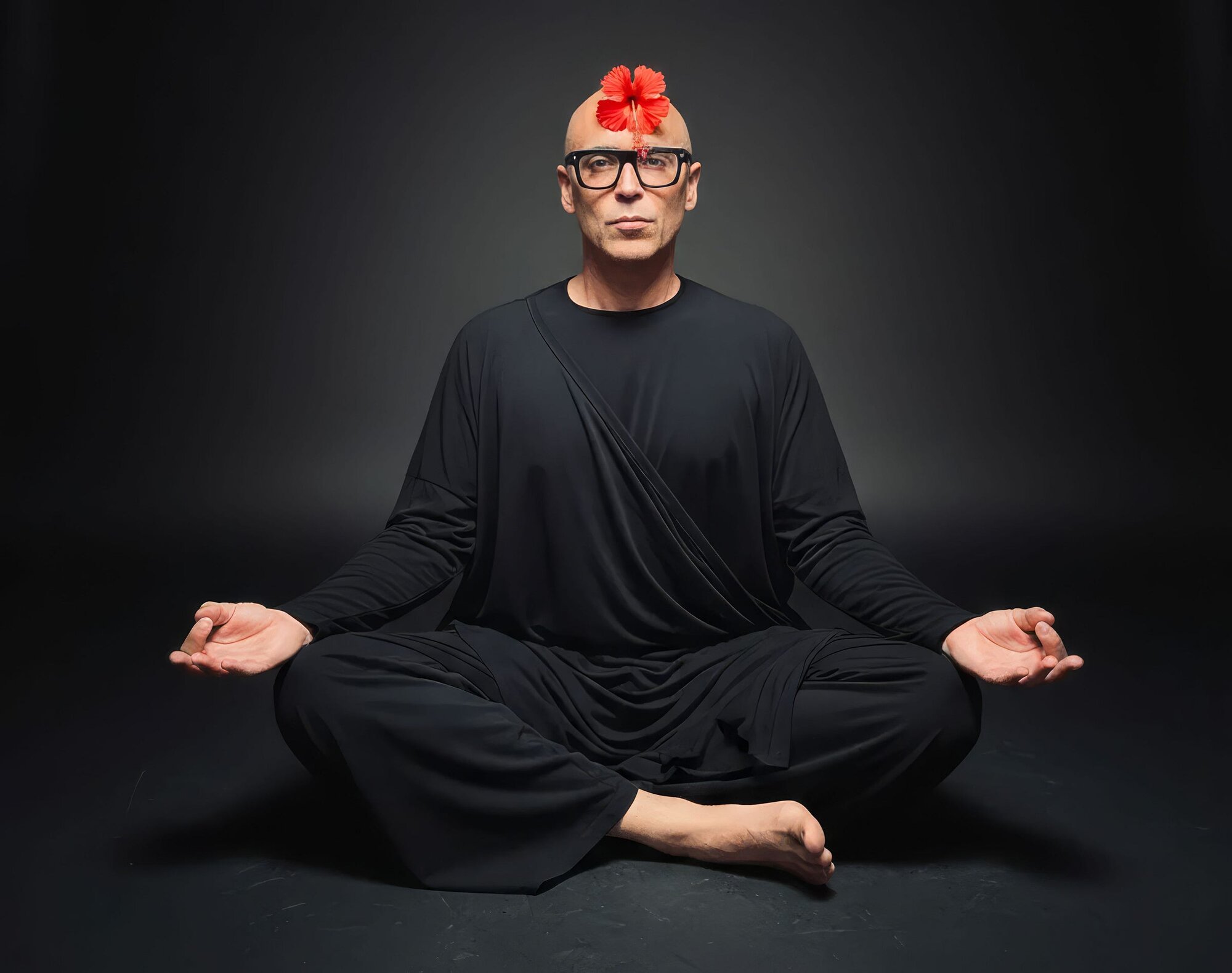
An Austrian Yoga teacher and tantric lineage holder claims to have preserved partnered breathing practices from extinct Indian traditions that bridge solo yoga, meditation and relational work.
AUDIO PODCAST
In a private retreat space in anywhere in the world, two people sit facing each other for what will become a many-hour meditation. They begin breathing in complex rhythms. Sometimes they open and close their eyes. Occasionally they gently touch. To an outside observer, it looks like an extended seated meditation between partners. What’s actually happening is far more unusual.
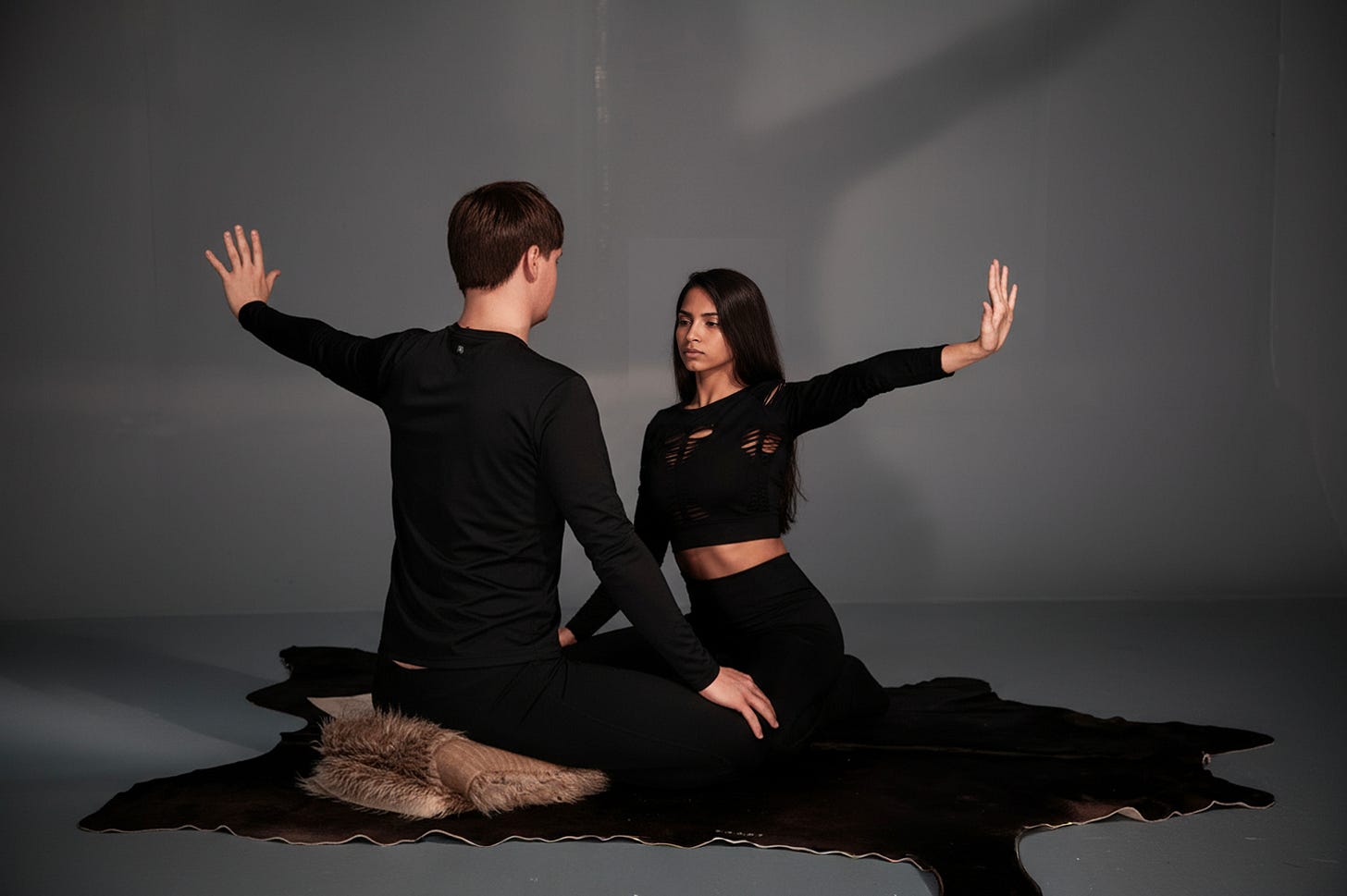
This is Sadhri, and Michael Wogenburg calls it "a spiritual treasure box from the lost tradition in yoga." For him, it represents the missing practice that bridges individual yoga sadhana and relational work. The ultimate encounter between polarities, the ultimate access to what he calls the subtle realms of the divine. It's also a practice that doesn't appear anywhere else in the yoga world.
"Sadhri is sex without sex," Wogenburg writes. "Orgasms without real orgasms. It's what you would call the absolute connection between the magical and the sensual."
Wogenburg, 57, operates Forbidden Yoga, teaching what he describes as West Bengal Shakta tantric practices. He offers private instruction and multi-week Sensual Liberation Retreats in any locations of the world. His approach preserves methods he says come from secret tantric kriya shastras and semi sexual rituals, practices that were largely lost or deliberately kept hidden as left-hand tantric paths faced suppression.
At the center of the "safe" practices he teaches sits Sadhri, a partnered laya yoga practice involving complex synchronized and desynchronized pranayamas that, by his account, nobody else is currently teaching. It's what he calls the missing link, the practice that existed historically to take individual pranayama work into the relational field but was lost when tantra came West.
What Makes Sadhri Different
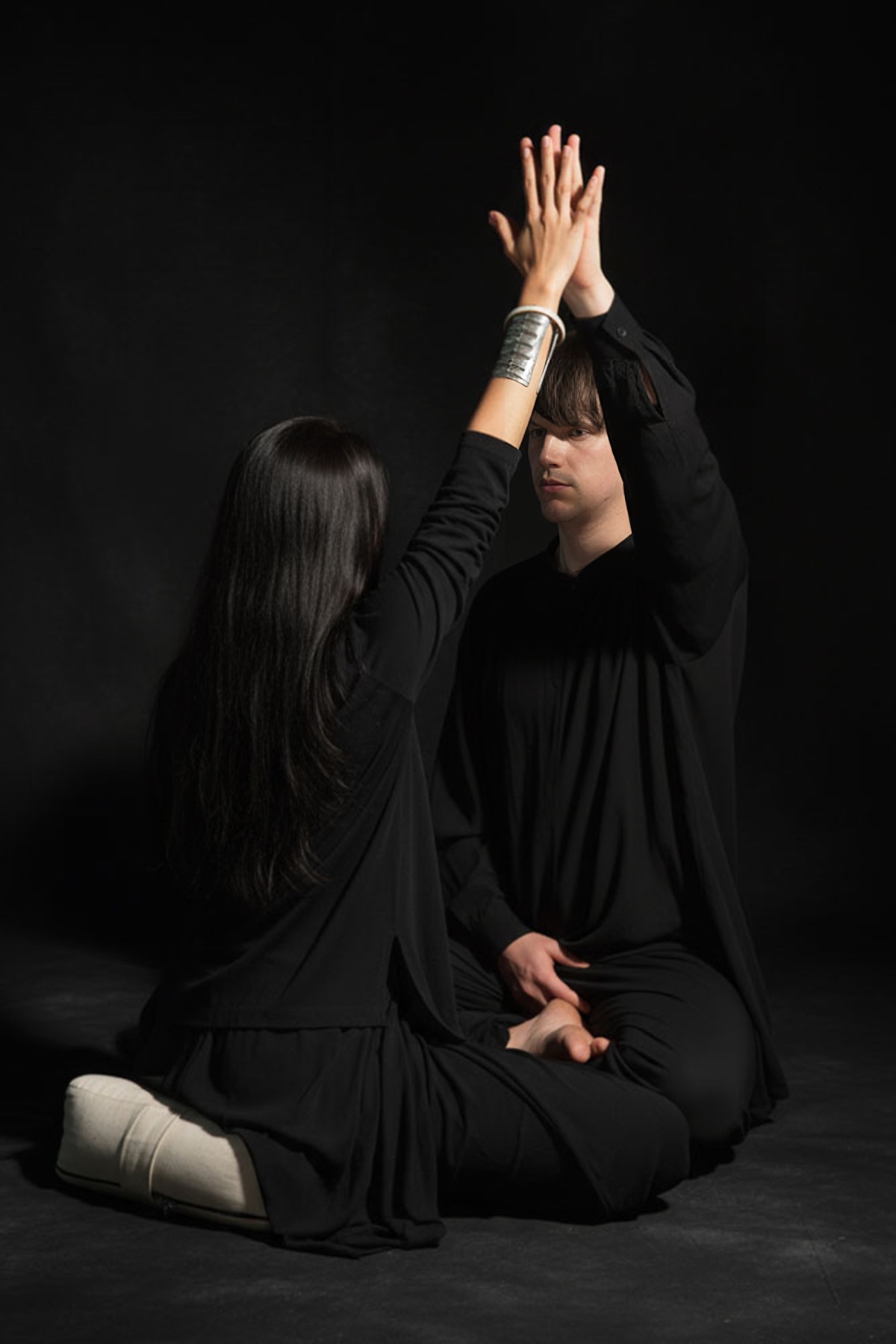
From the outside, Sadhri looks deceptively simple. Two people sitting, breathing together for hours. But the practice combines asana, pranayama, mudra, pratyahara, dharana, and dhyana performed between partners in precise rhythmic sequences designed to access layers of consciousness that standard meditation doesn’t reach.

“The key element is the rhythm of each exercise,” Wogenburg explains. “Changing these rhythms and tuning to specific rhythms helps to turn off our habitual logical thinking and give access to deeper layers of the subconscious.”
The practice works through what tantric laya yoga describes as three bodies: Sthula Sharira (the gross physical body), Sukshma Sharira (the energy body), and Karana Sharira (the causal or karmic body). When these bodies fall out of balance, illness and recurring problems emerge. The causal body in particular holds the samskaras, the seed impressions that according to tantric philosophy cause karmic patterns and rebirth.
Sadhri aims to work directly with all three bodies through complex breath patterns and concentration.
There’s no nudity in Sadhri. Almost no physical touch. Just two people breathing in sophisticated rhythms, holding mudras, opening and closing eyes at specific intervals, concentrating on particular points. Yet practitioners report experiencing profound energetic exchanges, states that feel more intimate than physical contact.
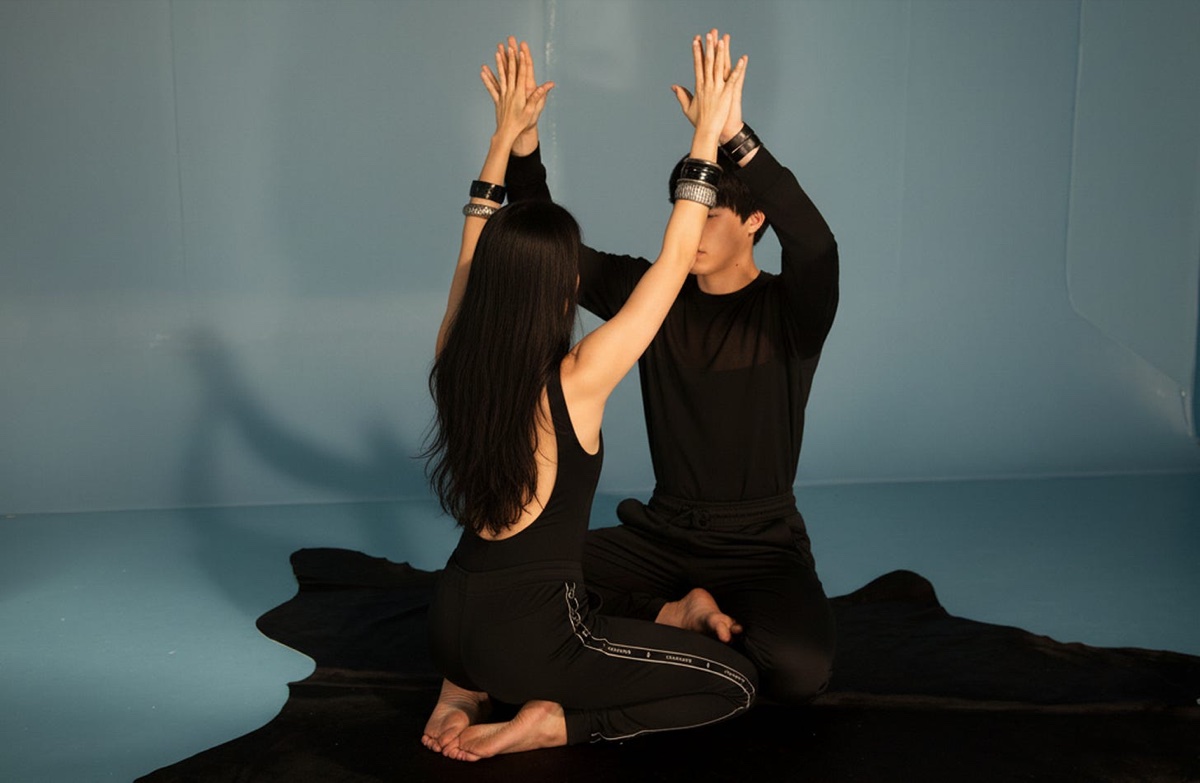
“While you practice Sadhri it only feels nice and beautiful,” Wogenburg writes. “The shift to awareness comes like a tornado that appears in the back, behind you, silent. Sadhri is so soft, so perfect, so gentle in the performance. But it is unleashing all the powers you have never yet experienced.”
The entire procedure is done sitting. No handstands, no complex postures. Advanced practitioners might spend six hours or more in a single Sadhri session, working through progressively deeper rhythmic patterns as the practice unfolds.
Why This Practice Disappeared
“When India started to become more and more ‘pure’ in terms of morality and became modernized, these practices have been forgotten,” Wogenburg explains. “They disappeared not because they didn’t work but because of cultural and moral changes.”
Left-hand Shakta tantra faced systematic suppression. Practices involving sexual energy, especially those between “strangers”, became culturally taboo. Much was deliberately hidden, transmitted only between teacher and select students, or lost entirely as lineages died out without successors willing to continue controversial methods.
When yoga came West in the 20th century, it arrived primarily through teachers like Krishnamacharya, Sivananda, and later figures like Yogi Bhajan who brought kundalini yoga to America. These teachers emphasized individual practice. The asana sequences, pranayama techniques, and meditation methods they taught were designed for solo practitioners.
The paired practices, the complex synchronized breathwork between partners, the methods for working with energetic exchange in the dyad, these didn’t make the journey. They remained in India, hidden within traditions that were already marginal and facing cultural pressure. Eventually most disappeared.
What Wogenburg claims to have preserved is this missing piece. The bridge between individual yoga practice and relational work. The technology for taking pranayama sophistication into the paired field.
The Solo Practices: Building Capacity
Sadhri doesn’t stand alone. It’s the culmination of extensive solo practice that builds the capacity necessary for the partnered work. Students typically spend months working through preparatory kriyas before attempting Sadhri.
The Homa Kriya sequence for example generate actual physical heat through sustained internal work. One practice has you sitting in half lotus with arms extended at 60-degree angles, wrists hyperextended downward, performing 54 rapid abdominal breaths followed by 54 repetitions of Agnisara (abdominal churning) during full-lung breath retention. The combination creates oxygen debt, muscular fatigue, and visceral manipulation that raises core temperature measurably within minutes.
These practices develop heat, not just physical warmth but what tantric texts call tapas, the internal fire that burns through blockages and transforms consciousness. The capacity to generate and maintain this heat becomes crucial in Sadhri, where the paired breathing can create enormous energetic intensity that must be held and worked with rather than dissipated.
The Mahavidyas kriyas are eight-movement sequences for each of the ten wisdom goddesses. Kali's sequence emphasizes pelvic floor work, repeated Ashvini mudra (anal sphincter contractions) performed 54 or 108 times while holding specific arm geometries. Tara’s sequence uses dynamic leg movements. Shodashi’s combines rapid breathing with positions that create abdominal compression.
Each goddess practice works with specific energy patterns, specific aspects of consciousness. Kali governs destruction and transformation at the root. Tara relates to crossing obstacles through dynamic movement. Shodashi represents perfected form at the heart center. Practitioners learn to recognize the distinct qualities each practice generates, developing sensitivity to subtle energetic states that becomes essential for navigating Sadhri’s complexity.
But all of these, according to Wogenburg, are preparatory. The solo kriyas develop capacity, build heat, train awareness. The partnered Sadhri practice is where transformation actually happens, where the individual work meets the relational field and something genuinely different becomes possible.
How Students Experience Sadhri
People who work with these methods describe effects that differ markedly from either solo yoga or typical couples work. The heat generation during practice is tangible, not metaphorical. The altered states from sustained synchronized breathing affect consciousness for hours or days afterward. Partners who’ve never met before the workshop report feeling strangely connected, not romantically but through something harder to articulate.
“It’s not relaxing,” one longtime student notes. “You’re working at your edge constantly. The breathing patterns are demanding, the concentration required is intense, and sitting for hours creates physical challenge. But something fundamental shifts. The way you sense energy, the way you relate to your own body and to other people, changes in ways that don’t happen through regular meditation or asana practice.”
Another practitioner describes Sadhri as “more intimate than sex but without any of the performance anxiety or goal orientation that sex involves. You’re just breathing together, but you feel more naked, more exposed, more truly meeting another person than you do in physical intimacy.”
The work attracts people interested in esoteric practices, willing to commit to extended training periods, and drawn to tantric methods that go beyond what’s available in studios or weekend workshops. These aren’t casual offerings. Wogenburg’s Sensual Liberation Retreats run from ten days to ten months, providing the container necessary for practices that require sustained engagement to produce effects.
Sadhri workshops are offered to both couples and singles. Participants rotate partners throughout the session rather than working exclusively with a romantic partner if they came with one. The practice is framed explicitly as non-sexual tantra, though the language Wogenburg uses about energetic intimacy and exchange acknowledges the erotic undercurrent without making it the focus.
“Sadhri is not a ‘find your best partner for life’ practice,” Wogenburg clarifies. “But strangely it happened that after Sadhri, people who never met and never talked feel strangely connected.”
This raises interesting questions about what creates intimacy between people. If two strangers can sit and breathe together for hours and afterward feel genuinely connected without having had a personal conversation, what does that suggest about the nature of relationship? Is intimacy primarily about sharing personal history and emotional disclosure, or can it emerge through shared energetic states and synchronized nervous system regulation?
Sadhri seems to demonstrate that intimacy can arise through purely somatic and energetic means, through bringing two nervous systems into synchronized rhythms and holding those rhythms long enough that something deeper than personality meets between the practitioners.
The Couples Meditation Gap
In the contemporary wellness landscape, there’s a strange gap. Individual yoga and meditation practices are ubiquitous. Couples therapy addresses relationship problems through conversation. Tantric workshops often focus on eye gazing, conscious touch, and sexual technique. But sophisticated paired breathwork practices that bridge solo meditation and relational work barely exist.
Some teachers offer partner yoga classes involving assisted stretches. Some meditation centers have couples retreats where partners sit near each other but practice individually. Some neo-tantric workshops include paired breathing exercises, but these tend to be simple techniques like synchronized inhales and exhales rather than the complex rhythmic patterns Wogenburg teaches.
Sadhri, if the lineage claims hold, represents what historically existed to fill this gap. Sophisticated paired pranayama technology designed to work with relationship dynamics at the energetic and karmic levels rather than the psychological level. Methods for two people to access meditative states together that neither could reach alone, creating what Wogenburg calls “the third entity” that emerges between practitioners during deep Sadhri.
“When you do Sadhri correctly, there are not two people practicing,” he explains. “There is a third being that appears between you, made of both practitioners’ energy but distinct from either individual. This third entity has its own intelligence, its own qualities. Working with this entity is the real Sadhri practice.”
This maps onto what some relationship therapists call “the relationship itself” as distinct from the two individuals in it. But Sadhri approaches this third entity not through conversation and psychological processing but through sustained synchronized breathing and energetic exchange. It’s a somatic and energetic technology for working with the relational field itself.
What This Means for Contemporary Practice
Whether or not Wogenburg has genuinely preserved extinct Bengali tantric methods, the practices he teaches point to something missing in contemporary yoga culture. The overwhelming focus on individual practice, the lack of sophisticated paired work, the gap between solo meditation and relational dynamics.
Western psychology has extensive frameworks for understanding relationships cognitively and emotionally. Somatic therapies work with the body individually or occasionally in paired work. Yoga and meditation develop individual consciousness. But sophisticated practices that work with the energetic and somatic dimensions of the relational field itself remain rare.
Sadhri, as Wogenburg teaches it, represents one approach to this territory. Complex synchronized pranayamas performed between partners in extended sessions, designed to access states that emerge only in the paired practice. Not therapy, not exercise, not sexual practice, but something distinct, a technology for working with consciousness in relationship through breath, rhythm, and sustained concentration.
The solo kriyas he teaches are demanding and unusual in their own right. The Mastaka sequences work with cranial awareness in ways that don’t appear in standard teaching. The Homa practices generate measurable heat through internal manipulation. The Mahavidyas sequences are complete protocols for working with specific goddess energies.
But Sadhri is what makes Forbidden Yoga genuinely distinct and what addresses a real gap in available practice. Hours-long sessions of paired breathing in sophisticated rhythms, working simultaneously with physical, energetic, and causal bodies through synchronized practice between partners.
“For many hours we perform sophisticated rhythms of the breath which relate to cleansing, gestures, breathwork, concentration and meditation,” Wogenburg explains. “These rhythms relate to the gross body, the energy body, and the causal body. The good thing is we don’t need to understand all of it during the practice. We go through Sadhri like children who play yoga.”
The apparent simplicity from outside, the technical complexity of what’s actually happening internally, the effects that emerge not during practice but days afterward, the connections that form between practitioners through energetic exchange rather than conversation or physical touch. This is what Wogenburg means when he calls Sadhri “intercourse without touching” and “the missing link” between solo practice and relational work.
An Esoteric Offering in a Therapeutic Market
Forbidden Yoga operates at the margins of contemporary yoga culture. No studio classes, no teacher training certifications, no social media presence. Small private retreats in Southeast Asian locations for students seeking practices beyond the accessible, therapeutic approaches that dominate the market.
In a yoga world focused on stress relief, fitness, and wellness, Forbidden Yoga offers something different. Practices that are technically demanding, conceptually complex, and explicitly aimed at transformation rather than relaxation. Methods that require months or years of consistent work to perform properly and produce effects.
"Sadhri takes you out of the polarity of mundane thinking," Wogenburg says. "It's a prayer to the brighter world."
For students willing to commit to extended retreats, to work through months of preparatory solo practice, to sit for hours breathing in complex synchronized patterns with partners they’ve just met, Forbidden Yoga offers access to this missing piece. Not yoga as exercise, not meditation as stress relief, not therapy as conversation, but tantric laya yoga as consciousness technology that works in the relational field through methods that look from outside like simple seated meditation but internally involve sophisticated manipulation of breath, awareness, and energetic exchange between practitioners.
Whether this represents genuine preservation of lost traditions or sophisticated reconstruction, it addresses something real. The gap between individual practice and relational work. The missing technology for bringing pranayama sophistication into the paired field. The question of what creates intimacy and connection between people at levels deeper than personality and personal history.